Getting Online During a Long Airport Layover
A layover is a period of restricted connectivity between two flights, and how you handle it depends mostly on how long it lasts. Airport
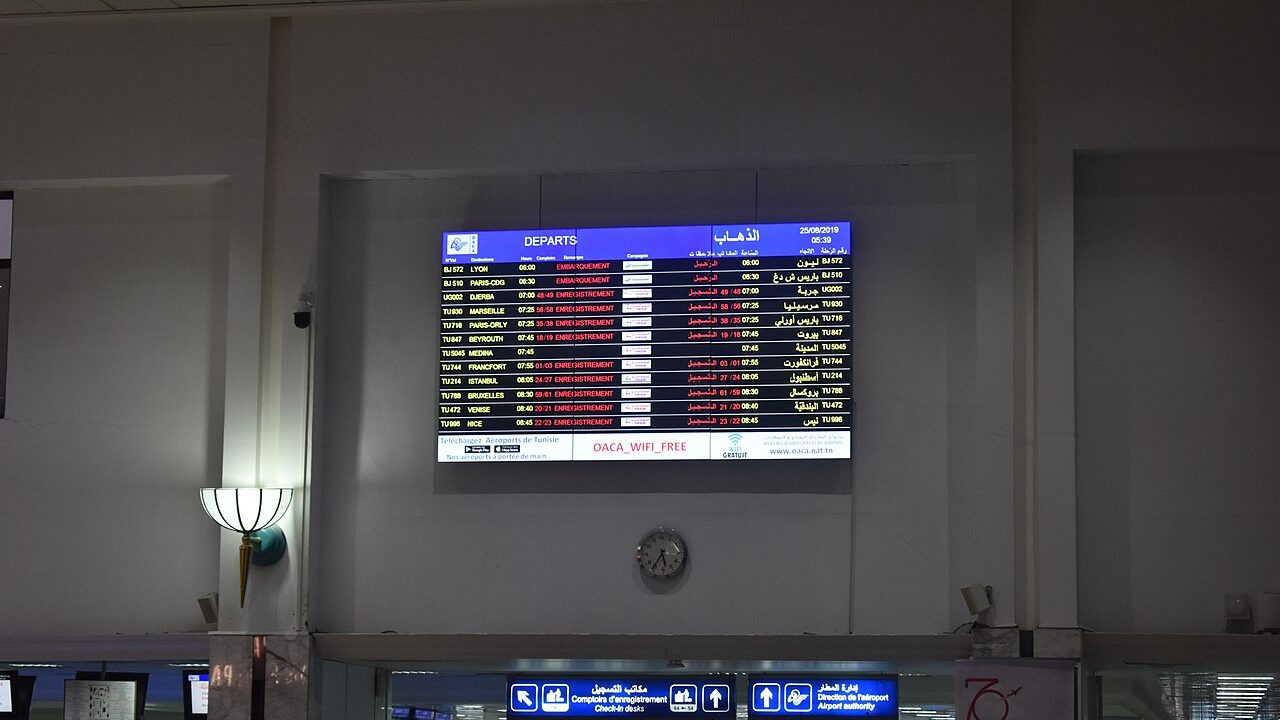
A layover is a period of restricted connectivity between two flights, and how you handle it depends mostly on how long it lasts.
Airport Wi-Fi has improved enormously over the last decade, which changes the calculation for anything under a few hours.
Is airport Wi-Fi good enough?
In most large international terminals, yes, and it is usually free for a limited session.
Speeds are adequate for messaging, email, maps and checking flight information.
Video calls and large uploads are less reliable, particularly at peak departure times.
Registration often requires an email address or a phone number, which is worth knowing in advance.
Where the airport network is poor, mobile data on a travel plan is the natural fallback.
Checking whether the terminal has a reliable network is a two-minute search before you fly.
Most airports publish their Wi-Fi details on their own website.
Does a travel plan cover the transit country?
Only if that country appears on the plan’s coverage list, which is frequently overlooked.
Plans bought for the destination often exclude the country where you change planes.
Where the transit country is covered, the plan works normally during the layover.
Where it is not, the phone may register on a network and then refuse to pass any data.
Checking the coverage list for every airport on the route is genuinely worthwhile.
Airports in major hubs are more likely to appear than small regional terminals.
A single excluded transit country can make an otherwise good plan inconvenient.
What about a transit visa and network access?
In some countries you cannot leave the transit area without a visa, which limits your options.
Inside the transit area, airport Wi-Fi is often the only practical option.
Some terminals have vending machines selling local SIM cards, though this is becoming rarer.
Where they exist, the price is usually higher than in town and the registration is abbreviated.
Buying before you fly remains the more predictable route.
Transit areas in the largest hubs are effectively small towns with shops and networks of their own.
Checking what is available in advance turns an uncertain few hours into a plan.
Does the plan’s validity start during a layover?
This is a genuine trap, because some plans begin counting at the first network registration.
A long layover in a covered country can therefore consume a day or more of the plan.
Keeping the line switched off until you reach the destination prevents that entirely.
That single habit preserves days on plans with a fixed validity window.
Where the transit country is not covered, switching off also avoids a failed registration attempt.
Deciding this before departure is far easier than remembering it in a terminal at midnight.
It costs nothing and occasionally saves a substantial part of a plan.
How do you handle a very long layover?
For layovers over six hours, a lounge pass becomes genuinely good value.
Lounges usually provide reliable Wi-Fi, power sockets and a quieter place to work.
Where a lounge is unavailable, finding a gate area with fewer people often improves the Wi-Fi considerably.
Charging points are worth locating early, since they fill up as departure times approach.
Downloading entertainment, maps and reading material during the layover covers the flight ahead.
Treating the layover as productive preparation time makes it considerably more pleasant.
A few hours spent charging and downloading removes most of the inconvenience of the next leg.
What if you need to work during a layover?
Working reliably needs more than casual Wi-Fi, so plan for a backup connection.
A travel plan covering the transit country provides that backup with mobile data.
Where the country is not covered, a short data add-on from your home carrier may be cheaper than a full plan.
Video calls are the hardest requirement, and airport Wi-Fi frequently disappoints on those.
Scheduling calls before or after the layover is often the most reliable approach.
Where a call is unavoidable, a lounge or a hotel day room improves the odds substantially.
Terminal coffee shops rarely offer the stability that a scheduled call needs.
What about security on airport networks?
Public networks in busy terminals are a well-known target for interception.
Using mobile data instead is meaningfully more secure, because it is encrypted by the network itself.
Where Wi-Fi is unavoidable, avoid banking, purchases and anything involving a password.
A VPN helps considerably on a public network, though it reduces speed.
On mobile data a VPN is mostly unnecessary for ordinary browsing.
Choosing between the two based on what you are doing is the sensible approach.
A message to family and a bank transfer are not the same risk at all.
Should you buy a plan just for the layover?
Usually not, because airport Wi-Fi covers the majority of layover needs adequately.
The exception is a very long layover with work requirements, or a hub with poor connectivity.
Where the destination is far away and the layover is short, the airport network is almost always sufficient.
Where the layover is long and the terminal is small, a small data plan can be worth it.
Comparing the cost against a coffee and a sandwich puts the purchase in perspective.
Most layovers cost less to manage with Wi-Fi than with a new data plan.
The problem is usually time rather than connectivity.
What about overnight layovers?
An overnight layover in a terminal is a genuine challenge, and the answer depends on the airport.
Some airports have transit hotels inside the secure area, which solve both sleep and connectivity.
Others have quiet zones with power and seating but no real facilities.
Where an airport hotel is available, the Wi-Fi and the shower usually justify the cost.
Charging and downloading before sleeping makes the following day considerably easier.
Planning an overnight layover rather than improvising it changes the whole experience.
It is worth checking what the specific terminal offers before you fly.
Does the airline app help?
Airline apps work on Wi-Fi and provide gate changes, delays and boarding updates.
They are usually the fastest source of accurate information during a disruption.
Downloading the app and logging in before you travel saves time at exactly the wrong moment.
Most apps also store boarding passes, which removes a dependency on connectivity.
Screenshotting the boarding pass as a backup costs nothing and occasionally rescues a situation.
App plus screenshot covers almost every eventuality in a terminal.
It is a small habit that pays off on the one day it matters.
Does a layover affect the plan’s validity at all?
It can, because some providers start counting the validity window at the first network registration rather than at the destination, so a long transit stop in a covered country may quietly consume part of the plan.
Keeping the travel line switched off until you reach the final destination removes that risk entirely, and it costs nothing beyond remembering to do it.
Where the transit country is not covered at all, switching off also prevents a failed registration attempt that can leave the phone searching rather than settling on a network.
How should you plan a layover?
Check the transit country against your plan’s coverage list before you buy anything.
Look up the terminal’s Wi-Fi arrangements and whether it requires registration.
Keep the travel line switched off until you reach the destination if the validity window matters.
Download maps, tickets and entertainment for the next leg during the wait.
Then treat the time as preparation rather than as dead time.
Most layovers are far more manageable than people expect once they have a deliberate plan.
The uncertainty is usually worse than the reality.