eSIM for a Cruise or Island Hopping Route
A cruise is a sequence of separate connectivity problems, because a ship at sea is not in any country and no ordinary travel plan
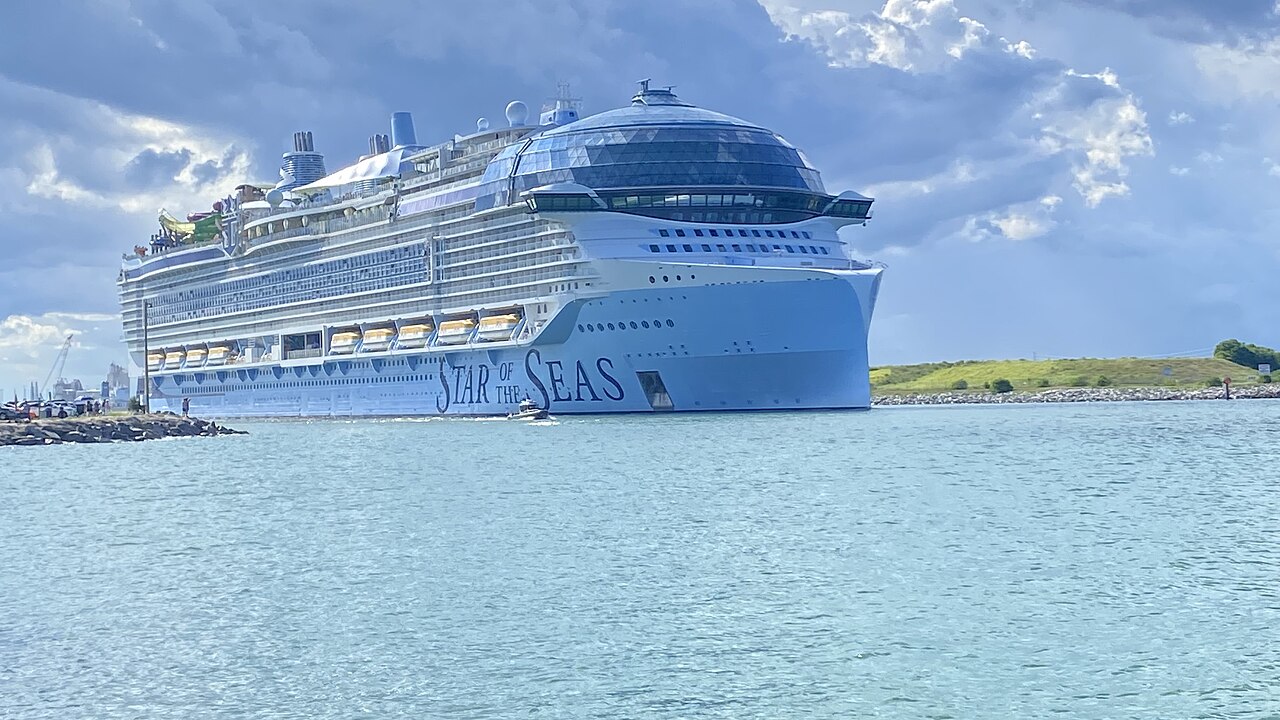
A cruise is a sequence of separate connectivity problems, because a ship at sea is not in any country and no ordinary travel plan reaches it.
The good news is that port days are ordinary travel days, and a normal plan covers every one of them.
Why does a plan fail at sea?
Mobile networks are licensed by countries, and the open sea belongs to nobody.
Ships connect by satellite, and that service is sold by the cruise line rather than by any carrier.
No wholesale travel agreement includes maritime coverage, because the underlying satellite capacity is priced completely differently.
Your phone may briefly display a maritime network name, but it will not pass data at any sensible price.
Switching off data roaming entirely at sea prevents an expensive surprise.
That toggle is the single most important setting on any cruise.
It is also the one most often left on by accident.
Can you pick up a coastal network?
Sometimes, depending on how far the ship is from the coast and how strong the land signal is.
Signals typically reach ten to thirty kilometres offshore, and further in flat coastal terrain.
That is enough to cover the approach to most ports and the first hour out of them.
It is not enough to cover a sea day between two distant islands.
Where signal does appear, a regional plan with coastal coverage will often work normally.
Position on the ship matters too, since a cabin on the seaward side may be shielded by the hull.
Deck space near the bow usually gives the best chance of catching a land network.
Should you buy the ship’s Wi-Fi?
It is the only reliable option at sea, and it is priced accordingly.
Packages are usually sold per device for the whole voyage, with tiers based on speed or volume.
The cheapest tier is often adequate for messages and email but not for video calls.
Buying before departure is frequently cheaper than buying on board, so check in advance.
Some lines include basic Wi-Fi in certain cabin grades, which is worth checking before paying twice.
Where the itinerary has many sea days, the package becomes the primary connectivity rather than a luxury.
Where it has few, the cost may not be justified at all.
How many sea days does it take to matter?
One or two sea days in a two-week voyage can be handled by disconnecting without much difficulty.
Four or more makes the Wi-Fi package worth serious consideration for anyone who needs to stay in touch.
Overnight passages between nearby islands usually retain coastal signal for much of the night.
Long ocean crossings have no coverage at all and need a plan for the entire period.
Counting the sea days honestly before departure is the whole of this decision.
Most itineraries publish them clearly, including the hours spent in open water.
It is the first number to look at when comparing two cruises.
What about island hopping by ferry?
Ferries between islands follow the same pattern, with coverage near the coasts and none in between.
Crossings are usually shorter than sea days, so the gaps are easier to tolerate.
On island groups that belong to one country, a single national plan covers every stop.
Where the route crosses a border, a regional plan handles the transitions automatically.
Ferries frequently have Wi-Fi of their own, usually slow and occasionally free.
Treating the crossing as offline time and the islands as covered is the realistic approach.
That is how most island hopping trips actually work out in practice.
Do port days work normally?
Yes, and this is the most useful fact about cruising with a travel plan.
Once the ship is alongside, the phone registers on a local network exactly as it would anywhere.
Maps, messages, apps, bookings and uploads all work as usual during those hours.
Port days are often long enough to cover everything you need for the following sea day.
Downloading maps, entertainment and reading material in port is a genuinely useful habit.
It converts the connectivity gap at sea into a minor inconvenience rather than a problem.
The whole voyage becomes a rhythm of connected days and offline nights.
Which countries does a cruise itinerary need?
List every port of call, including tender ports and any country visited only for an afternoon.
Check each one against the coverage list, because islands are frequently excluded from regional plans.
Caribbean and Pacific itineraries often need two or three separate plans to cover all stops.
Mediterranean routes usually sit comfortably inside one regional plan.
Northern European itineraries sometimes include countries outside the standard regional bundle.
Checking each port individually is the only reliable method.
A regional label on the plan is not evidence that your islands are included.
What about tendering and time ashore?
Tender ports put you ashore by boat, which means a short period without signal near the ship.
Once on land, coverage is normal and unaffected by how you arrived.
Some tender stops are small islands with limited networks, so check coverage for those specifically.
Time ashore on a small island may be short enough that connectivity hardly matters.
Where the stop is brief, offline maps and a downloaded plan for the day are enough.
Planning the day ashore before leaving the ship is the practical habit here.
It removes the need for connectivity at exactly the moment it is least available.
Does the ship’s own app help?
Many cruise lines run an onboard app that works over the ship’s local network without a data package.
It typically covers schedules, restaurant bookings and messaging between passengers on board.
That internal system does not reach the internet, but it does remove a lot of small frustrations.
Using it for onboard coordination keeps your paid data for things that actually need the internet.
Installing it before departure means it is ready when the ship’s network appears.
It is a useful supplement rather than a replacement for a real connection.
Several lines also sell messaging-only access at a much lower price than full internet.
How should you budget connectivity for a cruise?
Buy a travel plan that covers every port of call, and install it before you fly to the embarkation port.
Decide in advance whether the ship’s Wi-Fi package is needed, based on the number of sea days.
Turn data roaming off while at sea, and on again when the ship is in port.
Download everything you need during port days rather than relying on the sea.
Then treat the sea days as offline time, which is often the most restful part of the voyage.
Budget for the Wi-Fi package as a separate line item rather than expecting a travel plan to cover it.
That single distinction prevents the most common cruise connectivity disappointment.
So what is the reliable arrangement?
A regional or multi-plan travel package for the ports, plus the ship’s Wi-Fi if there are many sea days.
Roaming off at sea, roaming on in port, and offline maps downloaded in advance.
Every port becomes an ordinary travel day, and every sea day becomes a deliberate break.
Nothing clever is required, and nothing expensive is wasted.
Planning around the geography is the entire solution.
Water is simply a place where the coverage model changes, and that is easy to plan for.
Once you have counted the sea days, the rest follows immediately.